

Gooseberries
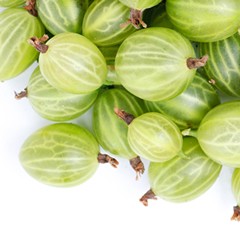
NY Berry Pest Monitoring Network
Cornell IPM offers a number of resources for berry pest, including the NY Berry Pest Monitoring Network.
Pollinator Resources
DEC Registered Pesticides for New York
This the the link to access the the NYDEC pesticide registrations. Access labels here.
Bureau of Pest Management - Information Portal - http://www.dec.ny.gov/nyspad/products?13Did You Experience Drought Issues on Your Farm?
Did You Experience Drought Issues on Your Farm?
Please Help Us Collect Regional Information So We Can Help You Be Better Prepared in the Future
As you know, the summer of 2016 was a period of lower than average rainfall combined with higher than average temperatures that led to a drought of moderate to unprecedented severity in New York and much of the Northeast
A 2016 NY drought survey is being conducted and we need your input.
Please click on details for more information.
Niagara Co. Vegetable & Small Fruit Grower Meeting Presentations
Small fruit presentations from the Tuesday March 1, 2016 Vegetable & Small Fruit Grower Meeting in Niagara Co.
Revisions in EPA WPS comment period open until Dec. 23, 2015
Deborah Breth, Integrated Pest Management
Lake Ontario Fruit Program
EPA is finalizing changes to the WPS. The WPS is a regulation primarily intended to reduce the risks of injury or illness resulting from agricultural workers' and handlers' use and contact with pesticides on farms, forests, nurseries and greenhouses. The rule primarily seeks to protect workers (those who perform hand-labor tasks in pesticide-treated crops, such as harvesting, thinning, pruning) and handlers (those who mix, load and apply pesticides). The rule does not cover persons working with livestock. The existing regulation has provisions requiring employers to provide workers and handlers with pesticide safety training, posting and notification of treated areas, and information on entry restrictions, as well as PPE for workers who enter treated areas after pesticide application to perform crop-related tasks and handlers who mix, load, and apply pesticides. The full content if you want to review and comment can be found at http://www.regulations.gov/#!documentDetail;D=EPA-HQ-OPP-2011-0184-2510.
A summary chart of major cahnges between the new revisions and the current standard can be found here.
http://www2.epa.gov/sites/production/files/2015-09/documents/comparison-chart-wps.pdf
The Commercial Storage of Fruits, Vegetables, and Florist and Nursery Stocks
Craig Kahlke, Team Leader, Fruit Quality Management
Lake Ontario Fruit Program
The information contained in this preliminary version of HB-66 has been assembled from information prepared by nearly 100 authors from around the world. The version posted here is a revised copy of a Draft made available online in November 2002 for author and public review and comment.
Animals in Fruit Crops

Orchards and other fruit crops are great habitat for many animals for food, and shelter. Deer, voles, rabbits, wild turkeys, and beavers, have caused damage to trees, bushes and fruit resulting in serious economic losses. Animals also pose a challenge for growers who participate in Food Safety audits to prevent contamination of fruit at harvest time. Growers must take steps to manage animals in fruit crops. P. D. Curtis prepares and updates the Wildlife Damage Management Chapter in the Cornell Pest Management Guidelines for tree Fruit and also for Berries.
Brief Overview of Labor Regulations & Recordkeeping for Farm Businesses
Matthew Wells, Production Economics & Business Management
Lake Ontario Fruit Program
This document provides a brief overview of state & federal labor regulations that apply to many fruit farms in N.Y.S., as well as examples of record keeping forms that assist growers in meeting these regulations.


Apples

Apricots

Asian Pears

Blueberries

Cherries

Currants

Gooseberries

Nectarines

Peaches

Pears

Plums

Raspberries / Blackberries

Strawberries

Unusual Fruit

Upcoming Events
NERME Protecting Your Farm with Progressive Employee Discipline
November 2, 2026 : Introduction to Program and Progressive Discipline
This free, interactive series will prepare farm owners and managers to implement and use progressive employee discipline with their workforce.
Open to all farm types. The series includes a special focus on progressive discipline systems for H-2A utilizing fruit industry farms.
November 9, 2026 : Importance of Feedback
This free, interactive series will prepare farm owners and managers to implement and use progressive employee discipline with their workforce.
Open to all farm types. The series includes a special focus on progressive discipline systems for H-2A utilizing fruit industry farms.
November 16, 2026 : Termination
This free, interactive series will prepare farm owners and managers to implement and use progressive employee discipline with their workforce.
Open to all farm types. The series includes a special focus on progressive discipline systems for H-2A utilizing fruit industry farms.
November 23, 2026 : Special Issues in Discipline/Termination
This free, interactive series will prepare farm owners and managers to implement and use progressive employee discipline with their workforce.
Open to all farm types. The series includes a special focus on progressive discipline systems for H-2A utilizing fruit industry farms.
November 30, 2026 : Employee Handbooks + Labor Roadshow Kick-Off
This free, interactive series will prepare farm owners and managers to implement and use progressive employee discipline with their workforce.
Open to all farm types. The series includes a special focus on progressive discipline systems for H-2A utilizing fruit industry farms.